Leighton House, Kensington feels as if it has been transported on a trailer from Syria or Turkey, plopped down in one of the most elegant neighbourhoods in London and garnished like you would a Christmas tree with ceramic Arts and Crafts tiles, taxidermied peacocks and thick layers of red paint. Far from being a dusty, dimly-lit shrine to a Victorian painter, it’s one of London’s most glamorous historic houses — and, with the right ticket, an absolute steal.
This was the home of Frederic Leighton, painter, sculptor, President of the Royal Academy, and all-round Victorian celebrity. Think Tracey Emin without the tat. Born in 1830, he studied art across Europe and became famous for his large-scale classical and biblical works of languorous draped figures, mythological drama and flesh-baring togas. In an era when most artists were bohemians scratching out a living, Leighton moved in royal and aristocratic circles.
His house is less “struggling garret” and more “Arabian Nights meets Mayfair club”. And here’s the Luxe on Less twist: with a National Art Pass, entry is just £6. And this also gets you into Sambourne House – that’s just £3 for each entry. Generous concessions for students and people with disabilities make this one of the best-value luxury experiences in London. And on a hot day, you can bask in a deckchair in its magnificent garden and dream that this house is all yours!
The Study – Gentlemen Only, Please
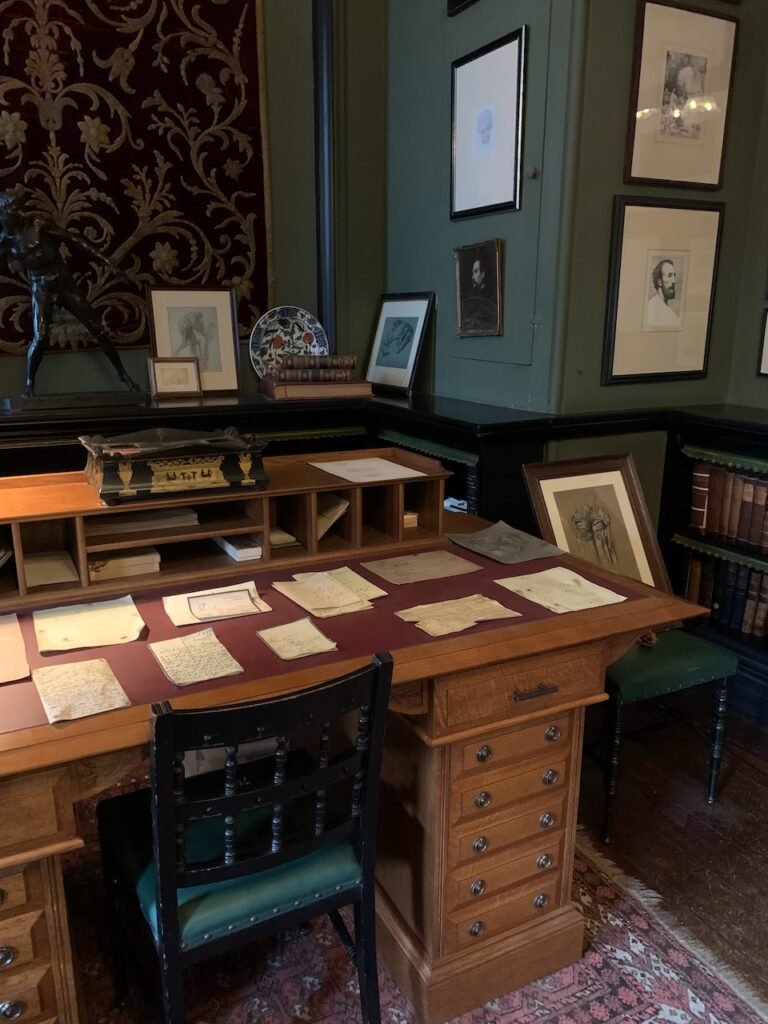
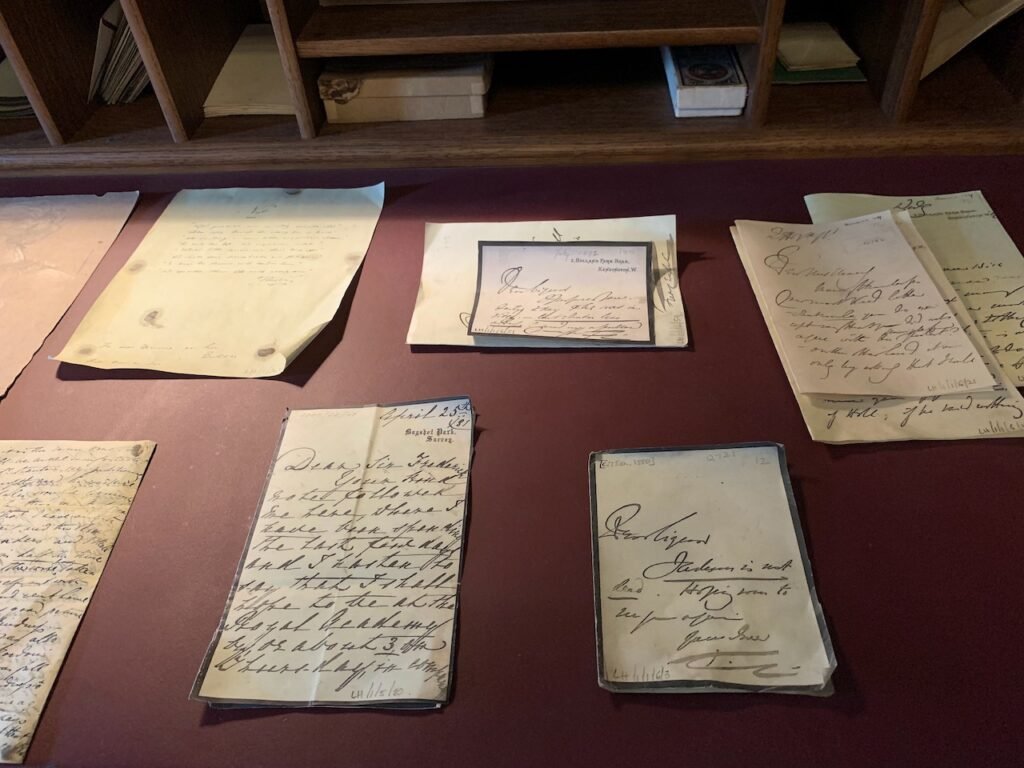
The most striking thing about the office is that it is elbow-deep in letters from the Victorian great and the good with the most extravagant handwriting. You can imagine Leighton sipping brandy here, discussing Greek statues and arranging his social life. The envelopes and letter headings show he hobnobbed with royalty and the intellectual elite. Oscar Wilde was a close friend. When he was eventually knighted as Lord Leighton of Stretton, some critics felt that this was less about artistic merit and more about social climbing.
The Arab Hall – The Leighton House, Kensington Masterpiece
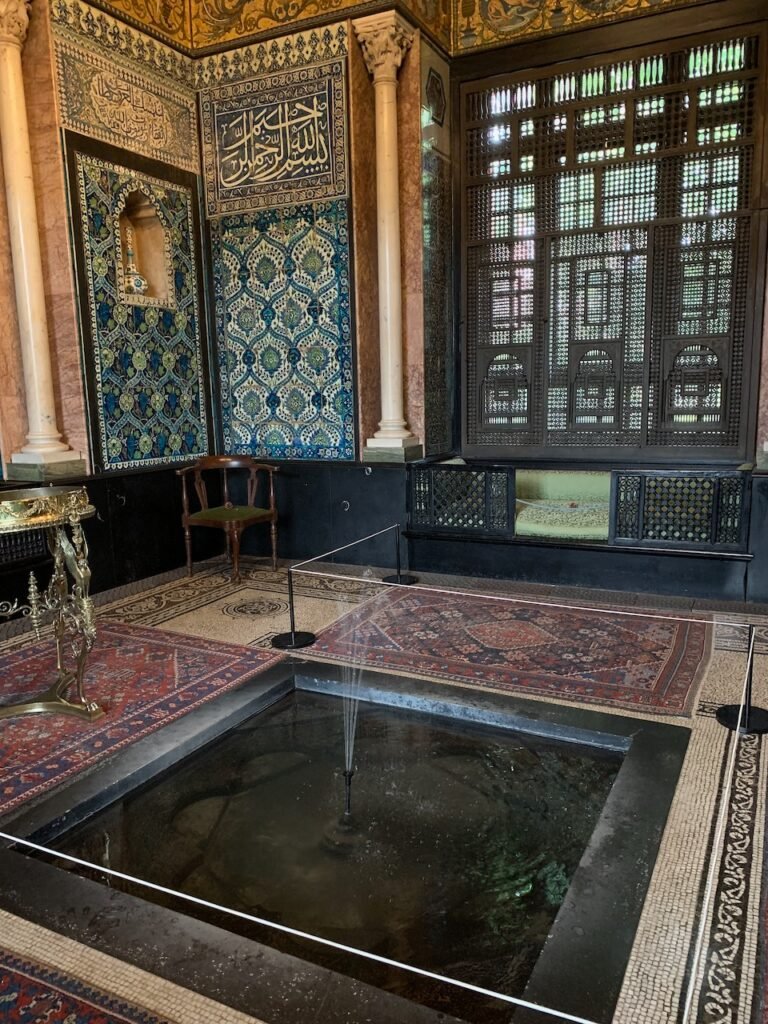
The Arab Hall is the jewel of Leighton House, Kensington. This is a fantasy lined with 16th- and 17th-century Iznik tiles imported from Damascus, topped with a gilded dome. To fill the space, he hired an artist to create new tiles in the style of the originals and fit these into an elaborate and convincing jigsaw. William de Morgan made a thumping loss on this endeavour. He underestimated the task at hand. If you look closely, you will see how difficult it is to distinguish the new tiles from the originals. A marble fountain gurgles in the centre, purely for atmosphere. It’s hard to overstate how exotic this would have seemed in Victorian London. It is indeed exotic today. Here was a man who didn’t just appreciate art — he could buy entire walls and have them shipped back to Kensington.
Amusingly, it’s said that guests, while dazzled, sometimes found the hall chilly in winter. One imagines them shivering politely in their bustles and tailcoats, unwilling to admit that grandeur can be draughty. I guess it is a bit like being elderly and having to get into a two-seater Ferrari.
If free art is your thing, explore our post on London’s Free Art Galleries. Or maybe after all that opulence you are ready for grunge and feel like checking out the graffiti in Leake Street tunnel.
The Hall and Landing – A Peacock’s Welcome
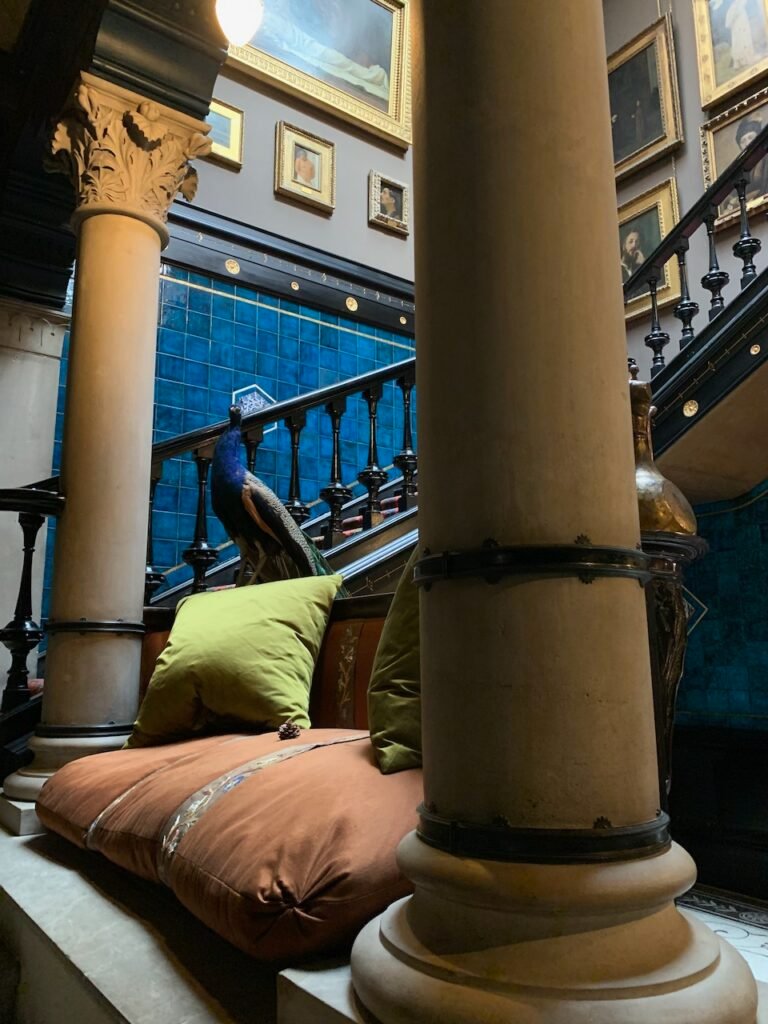
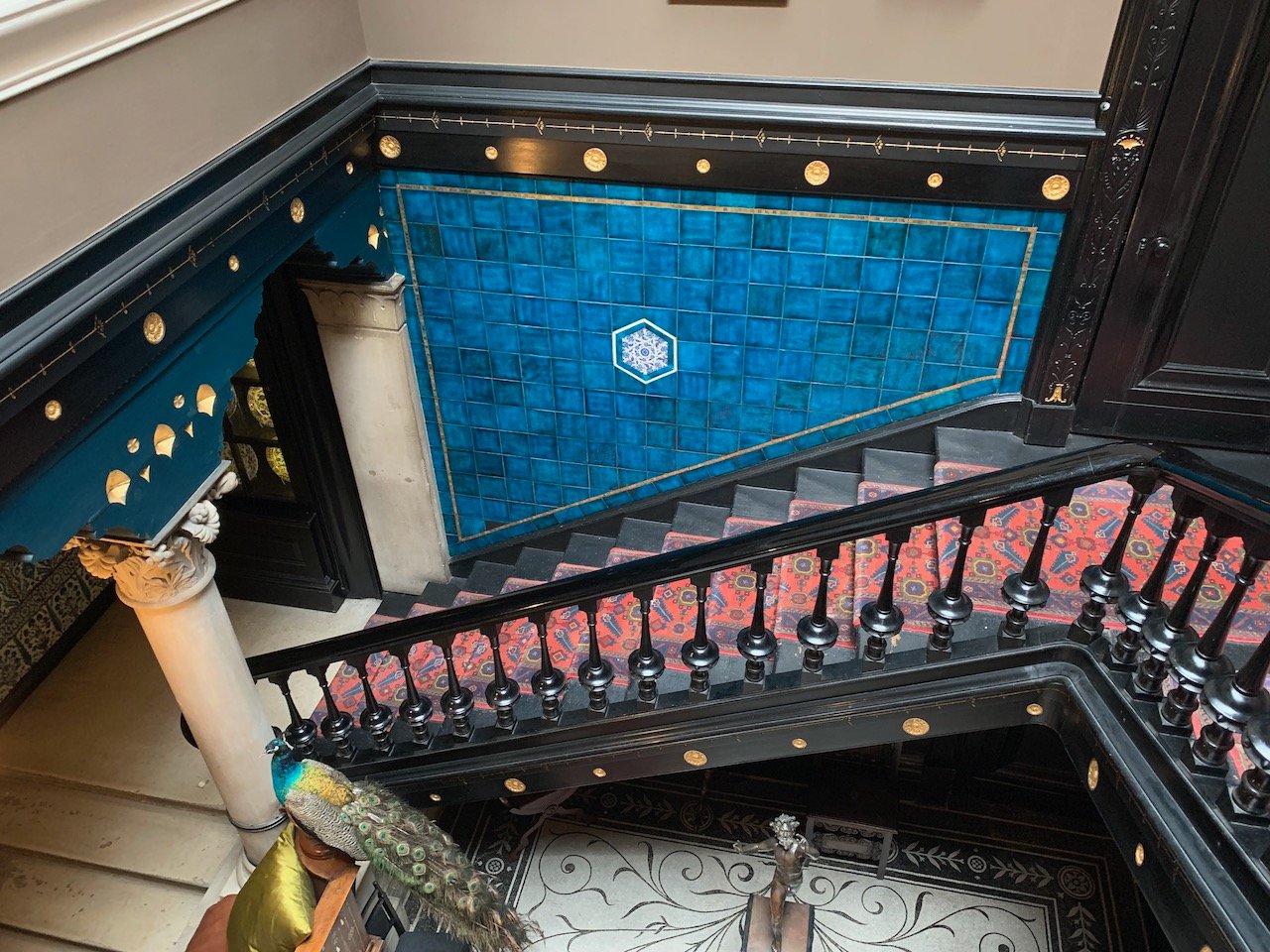
The main hallway at Leighton House, Kensington, is guarded by a stuffed peacock. This is Leighton’s nod to the Aesthetic Movement’s favourite motif. The feathers catch the light as you move past, an announcement that you’ve entered a house where beauty trumps anything practical. The landing above frames the space like a theatre balcony. It is from here that Frederick Leighton would make his grand entrance in a silk brocade robe.
The Red Dining Room – Where Scarlet Meets Silver
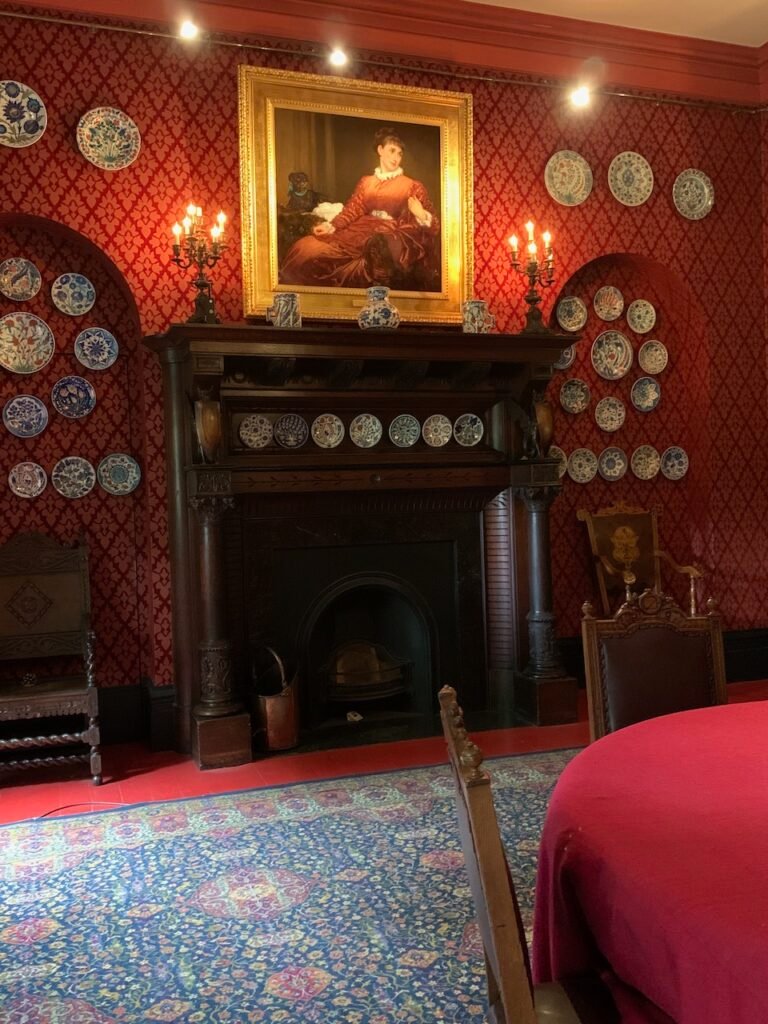
Deep crimson walls, gleaming silver, and a mahogany table fit for a twenty-course meal greet you in the dining room. Leighton’s dinners were as much about securing influence as sharing food. The Victorian art world was a game of politics as much as talent.
Social climbing was rampant in the Victorian Age. If you want to learn about the home of another eminent parvenu, read our post on the home of Charles Dickens.
The Downstairs Parlour – Select Conversations Only
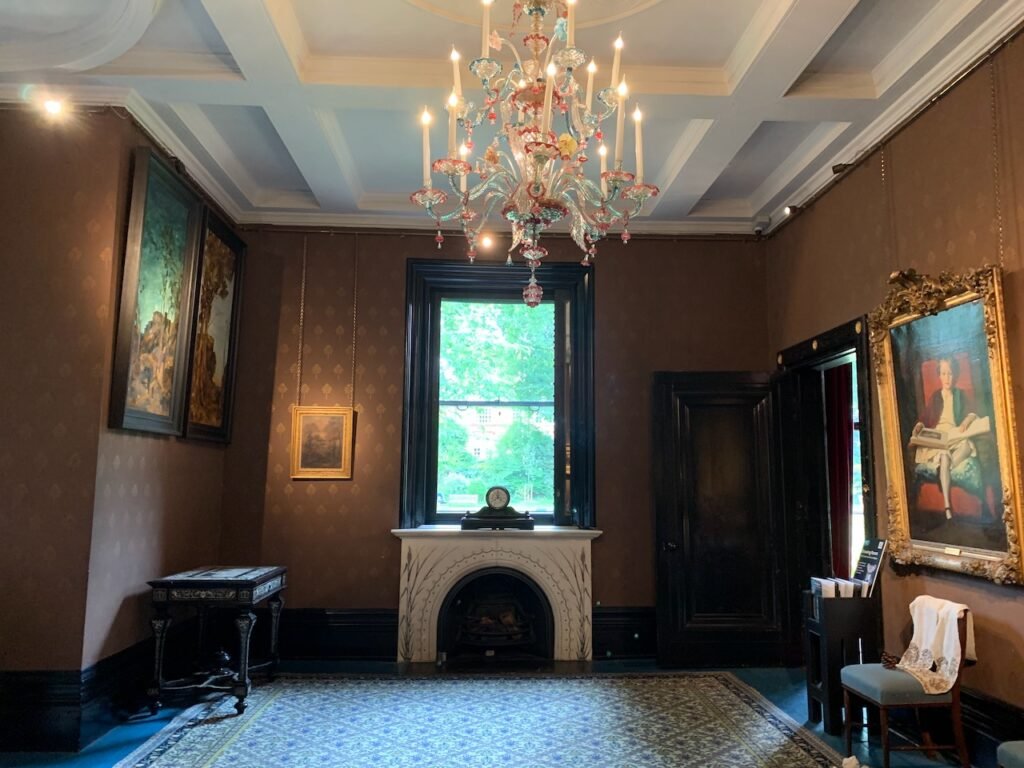
Smaller, warmer, and ideal for private gossip, the parlour off the Arab hall is underwhelming compared with the rest of the house. I would imagine this room played host to the sort of conversations that didn’t belong in a crowded dining room. Or maybe he had his coffee here when he couldn’t face the visual overload found elsewhere in the house.
The Silk-Lined Room Upstairs – Whispering Luxury
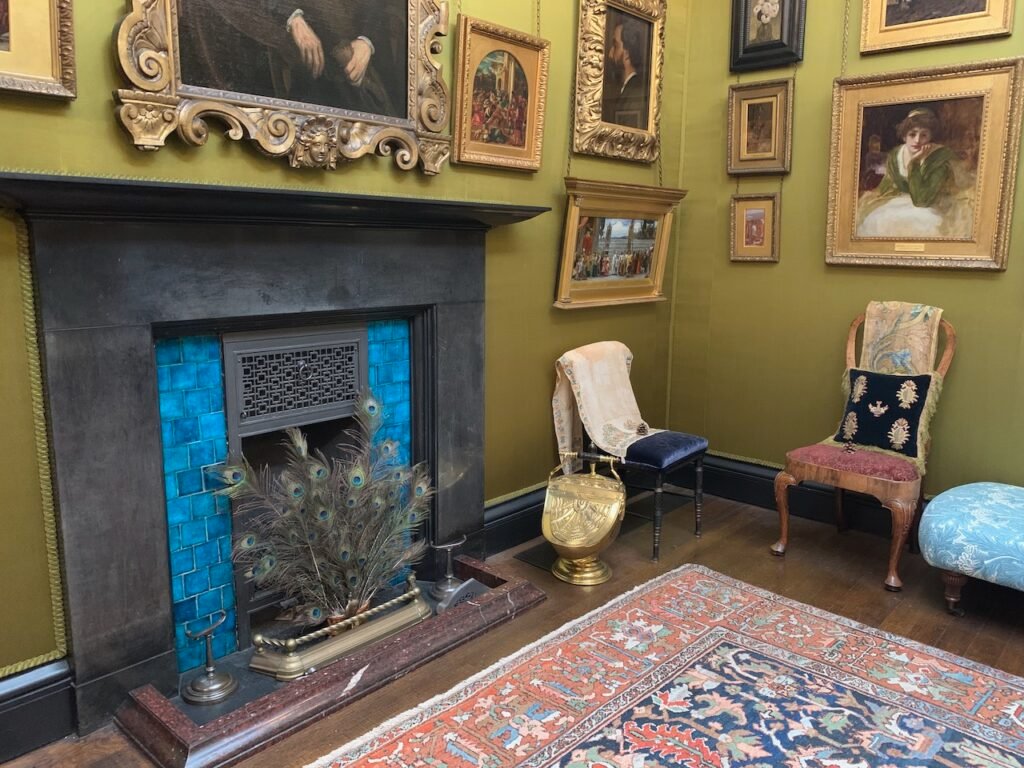
The upstairs lounge is lined in chartreuse silk — again it’s the kind of luxury few Victorians could dream of. The glazed octagonal dome roof throws a soft sheen on the walls. Envisaged as a place where he could pose in his tasselled hat or lounge on the alcoved, arabesque day bed holding court, he didn’t get to enjoy it for very long, as he died shortly after the room was completed.
The Upstairs Artist’s Studio – Cathedral to Creativity
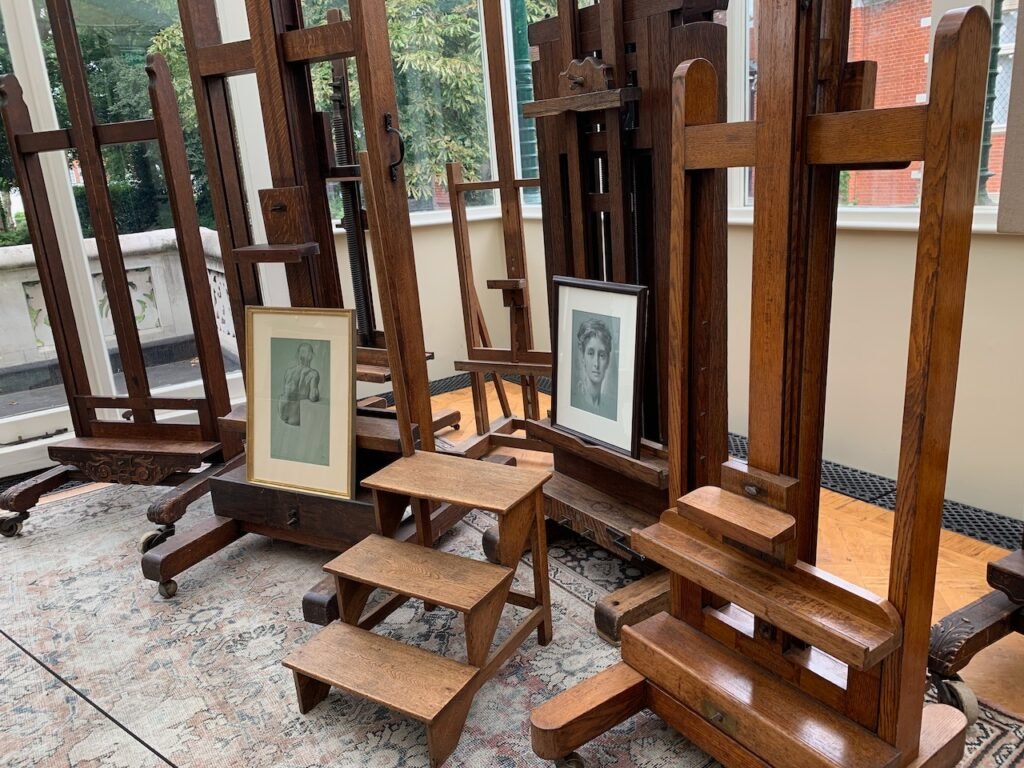
The studio has vast north-facing windows. He painted here in disciplined solitude, producing works such as Flaming June. This is his most famous and unabashedly sensual painting, which now lives in Puerto Rico.
With a fine view over the garden, this light-filled room with its skeleton-like wooden easels doubled up as a showcase for his completed paintings and choice pieces from his collection.
The Grand Salon, Leighton House, Kensington – All Eyes on the Host
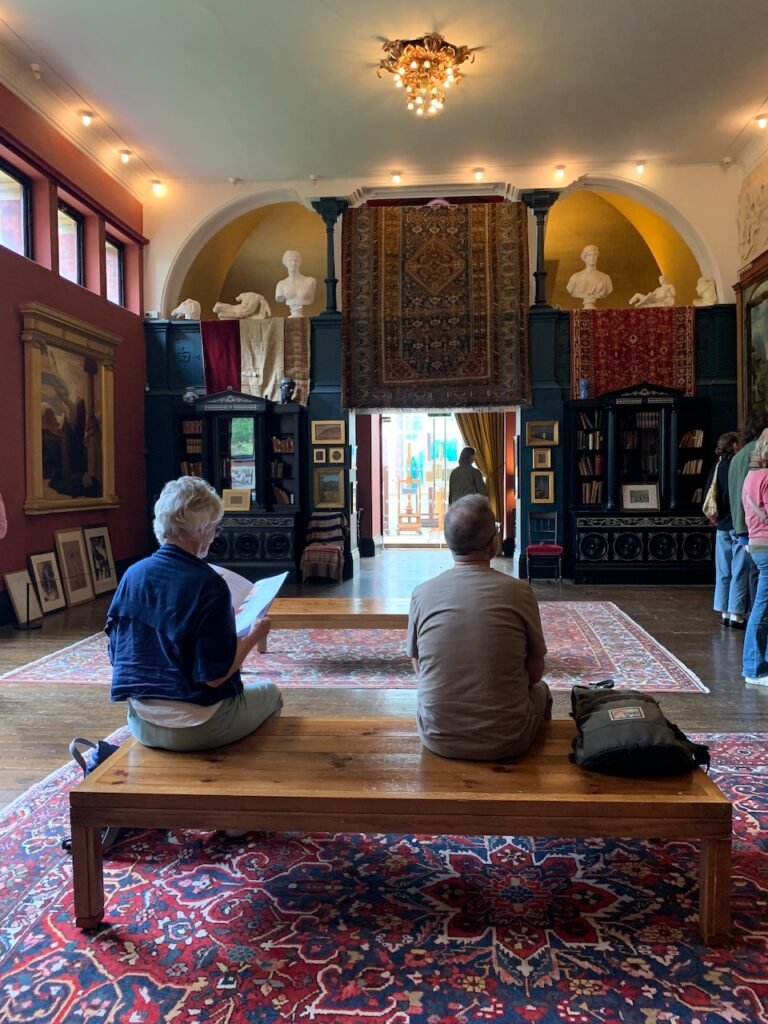
This grand salon was built to impress: high ceilings, sumptuous decoration, and enough floor space to hold the Royal Academy’s inner circle without anyone brushing sleeves.
Garden & Café – Take the Air
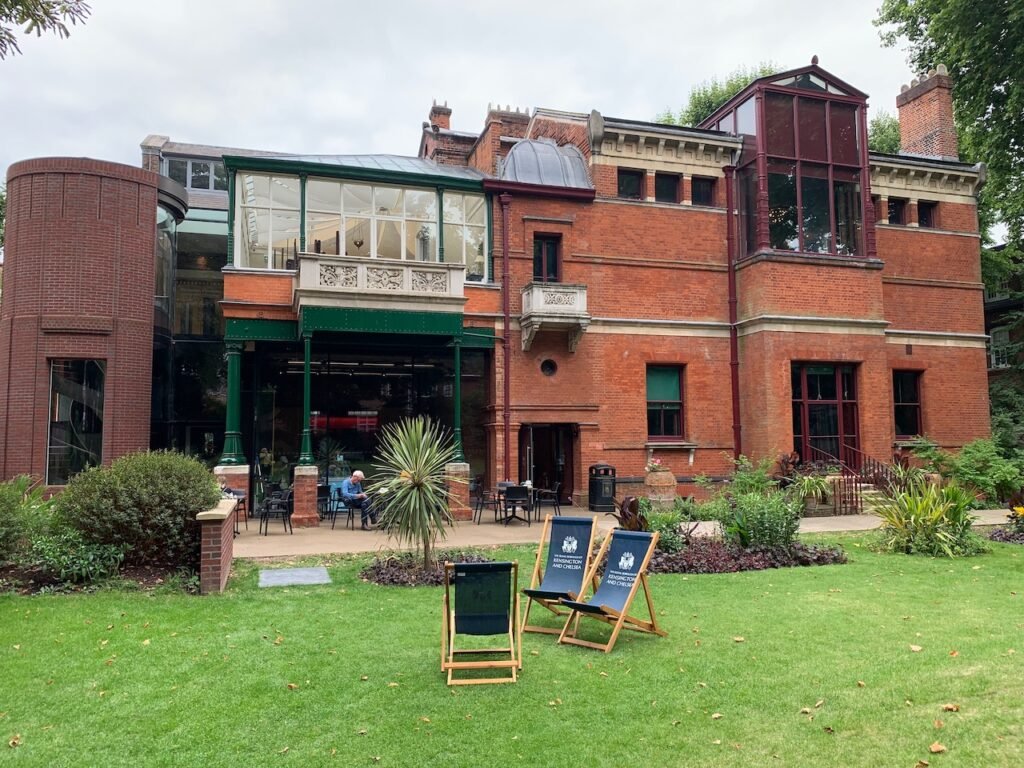
Behind the house lies a charming garden, unexpectedly tranquil given its central Kensington address. In summer, deckchairs appear, offering a shady spot to recover from the opulence inside. There is a café, but its offerings are more “functional” than “fabulous” — for something artisanal, stop at Gail’s Bakery (2-3 minutes away) en route.
Final Opinion on Leighton House
Leighton House, Kensington, is a self-portrait in bricks, tiles and silk, revealing the life of a man who refused to separate art from living. Step inside, and you’ll see exactly why Frederic Leighton remains one of the most glamorous figures of the Victorian art world — and, thanks to a bargain entry ticket price, why luxury in London needn’t cost a fortune.
Luxe for Less Visiting Tips – Leighton House, Kensington
-
National Art Pass: £6 entry (also includes Sambourne House).
-
Concessions for students and people with disabilities.
-
Easiest route: from Notting Hill Gate, take a bus towards Hammersmith, alight at the Design Museum, and walk five minutes.
Leighton House Kensington
12 Holland Park Road, Kensington, London W14 8LZ
www.rbkc.gov.uk/museums
Tel: 020 7361 3783